

DIFC handed 600 wealth and asset administration companies and named Mizuho as its associate for Japanese startups. At the Future Islamic Finance Forum, the business’s personal leaders gave a frank verdict: there isn’t a scarcity of capital or goodwill, however markets, establishments and fintechs are nonetheless too poorly linked.
On Wednesday, Dubai Future Finance Week moved its focus from fintech to wealth, mounted earnings, insurance coverage and Islamic finance. DIFC started the day with one other milestone. The centre is now dwelling to greater than 600 wealth and asset administration companies, effectively forward of another centre within the area by its personal rely, as household places of work and institutional buyers arrange regional headquarters in Dubai. The DealCatalyst Fixed Income Alternatives programme introduced European and US asset managers and structured credit score buyers along with regional banks and sovereign funds to debate non-public credit score, structured finance and new funding fashions.
A reputation for the Japanese bridge
The Japanese partnership that Arif Amiri, chief government of DIFC Authority, trailed on stage on Tuesday now has a title. DIFC has signed a strategic partnership with Mizuho Financial Group that may give as much as 6,000 of the financial institution’s startup purchasers entry to the DIFC Innovation Hub and Ignyte, its digital innovation platform, with market entry and tender touchdown help throughout the Middle East, Africa and South Asia. Amiri signed for DIFC and Suneel Bakhshi, deputy group CEO, signed for Mizuho, with DIFC Governor Essa Kazim as witness.
The deal builds on a 20-year relationship. DIFC hosts the UAE’s solely cluster of Japanese monetary companies, 19 firms using 560 individuals, together with Mizuho, SMBC, MUFG, Nomura and the Japan Bank for International Cooperation. Mizuho says it has supplied round JPY 1trn in financing to Japanese startups over the previous three years and has greater than 400 specialists supporting them. The partnership will deal with AI upskilling, Fintech, digital transformation and cross-border hyperlinks.
Islamic finance at 50
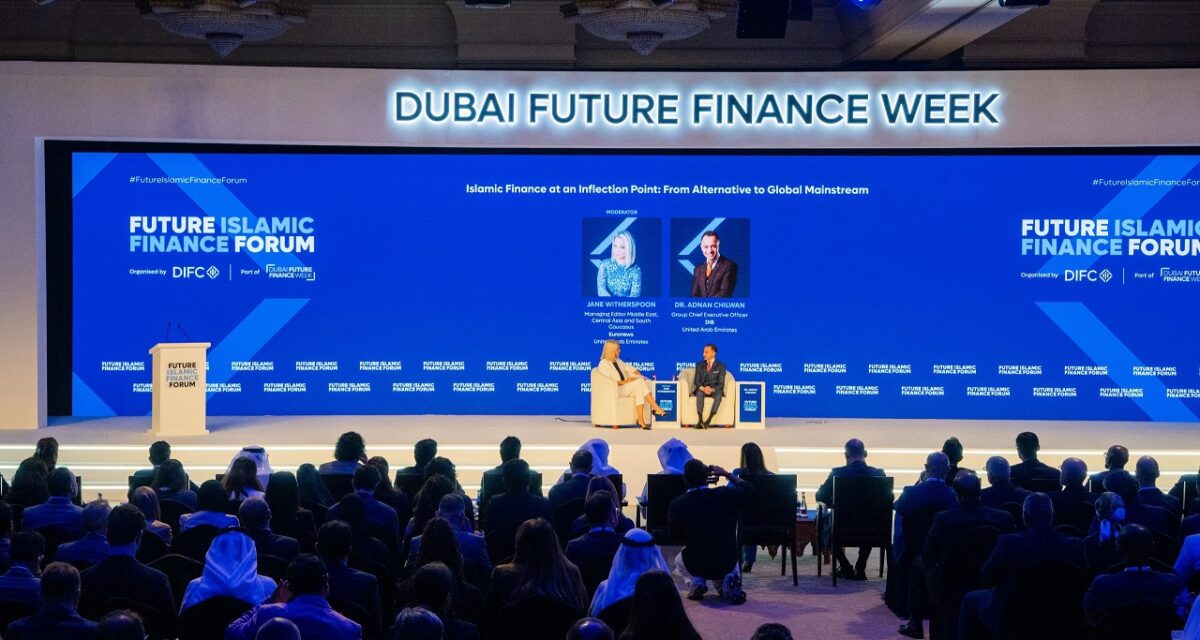
More than 1,000 individuals from over 50 international locations got here to the Future Islamic Finance Forum at Madinat Jumeirah, and DIFC used it to launch three initiatives. DIFC Academy is opening studying pathways by means of its Centre for Global Islamic Finance, aiming for greater than 3,000 learners by 2031. The Islamic Finance Innovation Challenge by Ignyte will pair Islamic banks with expertise ventures to pilot production-ready instruments for financing, sukuk structuring, compliance and takaful. And the DIFC Innovation Hub will arrange an Islamic Finance Innovation Centre with CRDB Bank, Emirates Islamic, Principle Investor Group and Standard Chartered Saadiq. The centre will convey banks, regulators, Shariah students, requirements our bodies and expertise companies collectively to work on shared issues, with a deal with the Global South. DIFC places the Islamic finance business at USD 9.31trn by 2030 and Islamic fintech at near USD 180bn this 12 months.
The management panel opened with a reminder of how far the business has come. Mustafa Adil, head of Islamic finance at LSEG, famous that fashionable Islamic finance is about 50 years previous and started in Dubai. It now holds greater than USD 6trn in belongings throughout over 2,200 establishments in additional than 80 international locations, and 56 international locations have Islamic finance guidelines of some type. It can be concentrated in a few markets that also work largely in silos.
Khurram Hilal, group chief government of Standard Chartered Saadiq, argued that the following section depends upon connection: between banking, asset administration and philanthropy throughout the business, and between areas exterior it. He mentioned the business has regarded west for too lengthy and ought to develop into a bridge throughout the Global South, particularly between East Asia and the Gulf. “There’s a lot more conversations that need to take place between the East and West of Asia,” he mentioned. He described a Middle East roadshow in Beijing this 12 months the place the central financial institution, the sovereign wealth fund and corporates had been all eager to discover Islamic finance, and mentioned the business wants to achieve out extra.
Sukuk: large, however bunched up
Hilal was blunt about sukuk. The market handed USD 1trn, he mentioned, however round 80 per cent of it sits within the GCC and Malaysia. Sovereigns and monetary establishments account for roughly 95 per cent of issuers, and lower than 6 per cent of the capital raised reaches Africa or South Asia, the place infrastructure wants are best. Because provide is brief, holders maintain their paper and the secondary market stays skinny. He pointed to rising Shariah-compliant repo volumes and an IIFM mission to standardise repo paperwork as methods to release trapped liquidity. He additionally mentioned this 12 months’s regional battle confirmed the necessity for correct hedging instruments for establishments concentrated in a single market.
Charles Haresnape, chief government of Gatehouse Bank, spoke in regards to the UK and Europe, the place 45 million Muslims in Europe and 6 million within the UK stay underserved. Gatehouse campaigned efficiently for equal tax therapy for some Islamic merchandise, however the UK didn’t renew its sovereign sukuk this 12 months, so the financial institution has to purchase abroad paper for its liquidity buffers. “There isn’t one, which is crazy,” he mentioned. He additionally mentioned about half of Gatehouse’s prospects should not Muslim, youthful prospects see Islamic and sustainable finance as a lot the identical factor, and the portfolios it sells are purchased primarily by standard buyers.
Professor Talal Yassine, managing director of Australia’s Salaam, which manages a Shariah-compliant pension fund of round AUD 750m, described the other lesson on advertising. Pitching to moral and Islamic buyers directly, he mentioned, ended up promoting to no person. Speaking in Islamic phrases has gone down higher with regulators and prospects. He additionally mentioned the business’s cash is out of step with the broader halal financial system. Nurym Ayazbayev, government director for Islamic finance on the Eurasian Development Bank, mentioned the UAE supplied USD 15.5bn of the USD 22.8bn in direct funding into Central Asia by mid 2025. The area now has 4 full Islamic banks and greater than ten Islamic home windows, and the financial institution has opened an workplace in Abu Dhabi to be nearer to Gulf capital.
Fintech’s commencement problem
A second panel checked out why Islamic fintech struggles to scale. Mohammad Kamran Wajid, deputy chief government of Emirates Islamic, mentioned banks, regulators, buyers and fintechs pursue totally different objectives in separate silos. Even an Islamic window and an Islamic financial institution in the identical group can have separate Shariah boards, he mentioned. His financial institution’s e-KYC pilot with a fintech stalled over compliance and fraud, and he recommended banks share platforms as a substitute of every reinventing the wheel.
Iqbal Khan, chief government of Fajr Capital, mentioned capital is just not the constraint however scale is. Very few fintechs get previous about USD 20m in income. Under financial institution capital guidelines, enterprise stakes carry danger weights that maintain Islamic banks out, and exit routes are restricted. He known as for a mezzanine fund to hold firms from startup to maturity, and for banks to separate funds from lending. For his agency, Shariah needs to be central to a enterprise. “Sharia is not seen as a bolt-on. Sharia is authentic,” he mentioned.
For the regulator, Eisa Al Amri, affiliate director for macro-prudential supervision on the DFSA, mentioned guidelines develop into a burden when they’re unclear, and uncertainty is pricey. “We don’t regulate the technology per se, but what we do is we look at the activity and the risks associated with that activity,” he mentioned. He pointed to the DFSA’s Innovation Testing Licence for startups and to a financial institution that had by no means held a digital custody permission wherever and received one in DIFC after early engagement. On Shariah, he mentioned the DFSA checks that a agency has the appropriate governance in place, whereas rulings stay a matter for the agency’s personal board.
Dr Mughees Shaukat, managing director of Panacea Consulting, put it extra sharply. He argued that forcing agile fintechs into bureaucratic banks is the fallacious mannequin, and that asset managers, capital markets and enterprise buyers ought to do extra of the lifting. Shariah requirements can take two to 3 years to supply, far too gradual for expertise, so he proposed a devoted physique to set fast-track requirements for digital finance and fintech. He mentioned Oman is constructing its personal worldwide monetary centre, modelled on Astana’s AIFC.
Dubai Future Finance Week continues on Thursday with the Future Tokenisation Forum at Jumeirah Mina Al Salam, the place regulators together with the DFSA and VARA take the stage, alongside the Dubai Family Wealth Summit and the Investment Leaders Exchange.
AI stage 2 of 5: drafted by our AI editorial assistant from supply materials our editor selected; fact-checked, edited and signed off by Mark Walker, Editorial Director. What the levels mean