


Lagos Water Corporation’s rehabilitation drive goals to revive waterworks, appeal to funding, enhance effectivity and strengthen local weather resilience amid rising demand and infrastructure challenges, writes Sunday Ehigiator
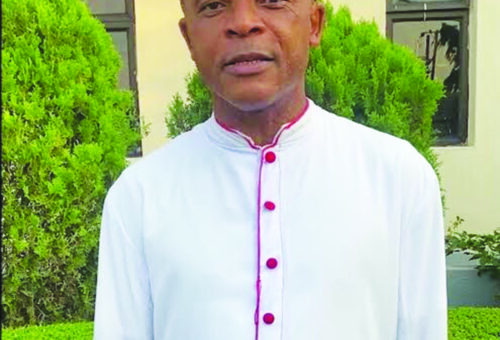
Dike Onwuamaeze
The Lagos Water Corporation (LWC) beneath the management of its Managing Director, Engr. Mukhtaar Tijani, lately acquired worldwide recognition in Glasgow beneath the 2026 International Water Association (IWA) Climate Smart Utilities Recognition Programme. The honour made the LWC the second Nigerian utility to obtain the popularity after Kaduna in 2022, and the primary in southern Nigeria. The programme assesses utilities on local weather adaptation, greenhouse-gas mitigation and climate-smart management. The recognition additionally highlights LWC’s efforts to construct resilience regardless of longstanding funding and operational challenges.
The Glasgow recognition got here towards the backdrop of a broader effort to revive dormant waterworks, rehabilitate essential infrastructure, modernise distribution networks and strengthen the Corporation’s operations, as Lagos seeks to construct a water system able to responding not solely to at this time’s calls for but in addition to the rising pressures of urbanisation and local weather change. That actuality offered a formidable problem when Tijani assumed workplace as Managing Director of the Corporation in July 2023, alongside Engr. Helen Omolanke Taiwo as Executive Director, Operations.
At the time, the Corporation reported that solely two of its 4 main therapy vegetation had been useful, producing a mixed 15 million gallons of water day by day, whereas solely six of its 48 mini and micro waterworks had been working, and even these had been beneath their capacities.
Three years later, the image has modified to one in all an establishment present process a broad-based programme of rehabilitation, restructuring, technological modernisation, and partnership constructing.
For Tijani, nonetheless, the duty seems to have been much less about recognition and extra about rebuilding the establishment from its foundations, with main interventions now targeted on restoring manufacturing capability and bettering the reliability of the methods required to transfer water throughout Lagos.
Replacing essential pumping gear
One of the most recent interventions was the alternative of essential pumping gear at Iju Waterworks after greater than three many years of service. LWC has acquired six clear-water pumps with motors and one further pump head for Iju Waterworks, in addition to two raw-water pumps with motors and management methods for the Adiyan Intake. Installation of the brand new gear at Iju is ongoing.
With Governor Babajide Sanwo-Olu’s imaginative and prescient to advance funding in essential water infrastructure, the intervention is anticipated to enhance water manufacturing and operational reliability at Iju after the brand new gear is put in and commissioned.
Powering the waterworks
Mukhtaar Tijani’s engineering and energy-sector expertise has introduced a helpful perspective to his management of the water sector. Reliable electrical energy is important to therapy vegetation, pumping stations and distribution networks. That understanding is mirrored within the collaboration between LWC and the Ministry of Energy and Mineral Resources, linking the rehabilitation of water infrastructure with the facility methods required to hold it operating. Another main part of the infrastructure programme is the rebuilding of the Akute Independent Power Plant, which is meant to present devoted energy to essential water infrastructure.
On April 26, 2026, Governor Sanwo-Olu presided over the signing of the facility settlement with Fenchurch. Rebuilding of the 26 MW plant started on September 26, 2026, with the present engines being eliminated for alternative with new fuel engines. The plant is deliberate to provide Akute Intake, Iju and Adiyan waterworks.
Financed by Zenith Bank beneath the state’s Public-Private Partnership (PPP) scheme, the reported implementation plan is to ship 10 MW inside 4 months and the remaining 16 MW inside 12 months.
The dedicated-power funding is anticipated to deal with one of many essential constraints affecting water manufacturing and pumping reliability, notably because the Corporation advances the rehabilitation of main waterworks and the completion of Adiyan II.
The Audacious Mandate
One of the defining options of Mukhtaar Tijani’s tenure has been the choice to strategy the Corporation’s challenges as interconnected issues moderately than remoted failures.
Production can’t be separated from pumping capability. Pumping can’t be separated from dependable energy. Increased manufacturing is of restricted worth with out useful distribution networks.
The cancellation of funding for the USAID-supported Lagos Urban Water, Sanitation and Hygiene (LUWASH) programme, initially valued at roughly $45 million, compelled the Corporation to evaluation its plans. The disruption adopted President Donald Trump’s halt to overseas help and the following withdrawal of USAID help.
LWC had constructed its four-year rehabilitation plan across the anticipated funding. With no preliminary funds provision to cowl the ensuing hole, Mukhtaar Tijani and the Corporation reassessed their priorities, deciding on waterworks that the Lagos State Government may fund. The response was to hold rehabilitation shifting, regardless that the complete programme may now not proceed as initially deliberate.
That philosophy is mirrored in Mukhtaar Tijani’s public statements. During a current inspection, he mentioned: “The work is progressing steadily,” including that “We are pleased with the progress we have made so far. Procurement has been completed, all the equipment has been delivered to the site, and installation is progressing as scheduled.”
Reviving Dormant Waterworks
Among essentially the most seen points of the programme has been the rehabilitation and recommissioning of services that had both grow to be dormant or had been working beneath potential.
The Mosan Okunola Waterworks was recommissioned on December 14, 2023, with reported manufacturing restored to two million gallons day by day. Supply was additionally prolonged into Baruwa, an space that had confronted extended water shortage and groundwater contamination.
The intervention is critical not merely due to the restoration, however as a result of the Corporation moved past manufacturing to join the water to communities, with further connections and community extensions deliberate.
Akilo Waterworks was recommissioned on December 12, 2025, following the rehabilitation carried out with WaterAssist Nigeria and Armani Beauty’s Aqua for Life initiative. The facility has a capability of 4,500 cubic metres day by day, with the capability to serve roughly 100,000 residents, alongside 20 water kiosks. The challenge included new boreholes, alternative of electromechanical gear and rehabilitation of the distribution community. Importantly, the partnership additionally integrated family enumeration, baseline surveys, hygiene promotion and group engagement.
This mixture of bodily infrastructure and group engagement illustrates an rising mannequin inside the Corporation: water tasks are more and more being thought of not merely as engineering assignments, however as service-delivery methods.
The rehabilitation programme additionally consists of the development of a brand new mini waterworks on Lagos Island and the rehabilitation of Ajegunle Waterworks.
Alongside these interventions is the $2.5 million grant-backed rehabilitation of Ojokoro Waterworks, supported by WaterAssist Nigeria and WorkforceWater, with the involvement of well-liked YouTuber MrBeast. The partnership displays the worldwide help being drawn to the Corporation’s infrastructure programme beneath Mukhtaar Tijani’s management.
The Ojokoro rehabilitation contract was signed on September 4, 2026, with Bayroyal International Ltd. It consists of civil, mechanical, electrical and instrumentation upgrades, borehole rehabilitation and drilling, photo voltaic integration, strain monitoring, leakage detection, automated community administration, metering and community enlargement. It is anticipated to profit roughly 72,000 residents when delivered. The Lagos Island, Ajegunle and Ojokoro tasks are focused for completion inside 12 months.
Adiyan II: Moving a long-delayed challenge ahead
Perhaps essentially the most consequential challenge within the Corporation’s rehabilitation programme is Adiyan II.
The long-delayed waterworks challenge was revived in November 2023 following renewed authorities funding commitments, contractor remobilisation and stronger challenge oversight. Governor Babajide Sanwo-Olu inspected the Adiyan II challenge in February and December 2025 as work progressed, offering help to the challenge alongside the challenge oversight being undertaken by Mukhtaar Tijani and the Corporation’s administration.
Governor Babajide Sanwo-Olu publicly acknowledged Mukhtaar Tijani’s position in reviving Adiyan II on the first Lagos Physical Planning Summit, held at Eko Hotels and Suites, Victoria Island, on October 15–16, 2024.
Following former Governor Babatunde Fashola’s attraction to prioritise the challenge, Sanwo-Olu counseled Mukhtaar Tijani’s persistence and constant advocacy in bringing the long-stalled waterworks again on observe.
When accomplished, Adiyan II is designed to produce 320,000 cubic metres of handled water day by day, greater than 70 million gallons, and is projected to serve greater than 5 million residents. Tijani has repeatedly highlighted the significance of the challenge. In a public replace, he mentioned he had mentioned the Adiyan II challenge and the Corporation’s broader infrastructure upgrades, together with the event of community intelligence to enhance water distribution.
The challenge, which is anticipated to be operational in 2027, can also be being pursued alongside funding in devoted energy infrastructure, together with the rebuilding of the Akute Independent Power Plant, which is deliberate to provide Adiyan in addition to Iju and Akute Intake.
Rebuilding Network Beneath the sleepless metropolis
Water infrastructure shouldn’t be solely about therapy vegetation. Much of the problem lies beneath the roads and communities by way of which water should journey.
Under Mukhtaar Tijani’s management, the Corporation has labored with technical companions to hint and digitise greater than 170 kilometres of transmission pipelines utilizing Geographic Information System expertise.
Previously unmapped sections had been integrated, whereas valves, junctions and key clients had been geotagged. A preliminary hydraulic mannequin was additionally developed to analyse water flows and strain.
In 2025, LWC went additional by deploying a robotic pipeline inspection machine developed with Konsadem Associates and McAlpha Inc. The expertise is designed to establish corrosion, cracks, blockages and potential leak factors. The ensuing info has been used to inform rehabilitation priorities in areas together with Ishasi, Apapa, Magodo, Alexander and Isolo.
The significance of this intervention is that it strikes infrastructure administration from guesswork in direction of data-driven decision-making.
Opening the PPP door
Another part of the technique is the Corporation’s try to leverage personal capital and experience with out surrendering authorities possession of its water belongings.
LWC developed its 2025–2030 Strategic Business Plan, unveiled in December 2024, with 12 precedence targets and a costed implementation schedule.
The priorities embrace rehabilitation of main therapy vegetation and trunk mains, completion of Adiyan II, restoration of energy infrastructure, rehabilitation of 16 mini and micro waterworks, employees improvement and improved buyer engagement.
The Corporation additionally established a public-private partnership framework for seven pilot schemes masking Lekki, Akilo, Victoria Island Annex, Magodo, Abesan, Alexander and Apapa. Following stakeholder engagement in August 2025, formal invites for bids had been issued.
The proposed mannequin retains authorities possession of the belongings whereas introducing personal financing and operational experience.
At a employees engagement on the proposed PPP programme, Mukhtaar Tijani articulated his ambition succinctly: “My vision is to see the waterworks alive.” He additionally spoke of the target of enabling residents to expertise functioning water provide of their communities.
Building for the long run
The Corporation’s present path more and more extends past repairing what’s damaged to getting ready for future calls for. That consists of climate-smart infrastructure, improved community intelligence, digital buyer methods, stronger partnerships and new financing fashions.
As Lagos State’s inhabitants grows, the water demand continues to enhance, making it mandatory to develop infrastructure to hold tempo. In response, the Corporation is creating a grasp plan to information its efforts to shut the hole between water provide and demand.
The plan is being designed as a roadmap masking the brief time period, from 2026 to 2030; the medium time period, from 2031 to 2040; and the long run, from 2041 onwards.
Through this strategy, the Corporation goals to place present rehabilitation efforts inside a wider plan for assembly the state’s future water wants, linking the restoration of current services with the infrastructure enlargement required to serve a rising inhabitants.
From restoration to resilience
Perhaps essentially the most revealing measure of Mukhtaar Tijani’s work is the breadth of the agenda. The goal is now not merely to restore particular person waterworks. It is to create a utility able to producing, distributing, metering, and managing water extra effectively, whereas attracting technical experience and funding.
The Corporation’s partnerships involving WaterAssist, JICA, the Resilient Water Accelerator, Suez and different technical and funding companions proceed to present a part of the institutional backing for the reforms. Yet, the last word measure of any water utility stays simple: whether or not residents can activate a faucet and obtain secure, dependable water.
That is why the importance of the reforms at Lagos Water Corporation lies not solely within the variety of tasks introduced or services rehabilitated, however within the try to reconnect infrastructure funding with on a regular basis service supply.
The journey shouldn’t be full. Some tasks stay beneath building, some advantages are nonetheless projected, and a number of other infrastructure investments are at procurement or implementation phases. But the report since 2023 exhibits an establishment pursuing change on a number of fronts, from dormant waterworks and ageing pumps to digital mapping, employees restructuring, private-sector partnerships and local weather resilience.
For a metropolis that doesn’t sleep, whose inhabitants and water demand proceed to develop, that institutional rebuilding could finally show as essential as any single waterworks. The activity forward is to flip the momentum into sustained, measurable and reliable water provide for extra Lagos residents.
As Tijani places it, the ambition is easy: to deliver the waterworks again to life and be sure that the Corporation’s transformation finally interprets into dependable water provide for the folks it was established to serve.