

The World Bank, on Thursday , tasked state governments to transform the substantial fiscal house created by latest financial reforms into higher jobs, public providers, and residing requirements.
The financial institution mentioned elevated revenues would have restricted improvement impression if not matched by extra environment friendly and accountable spending.
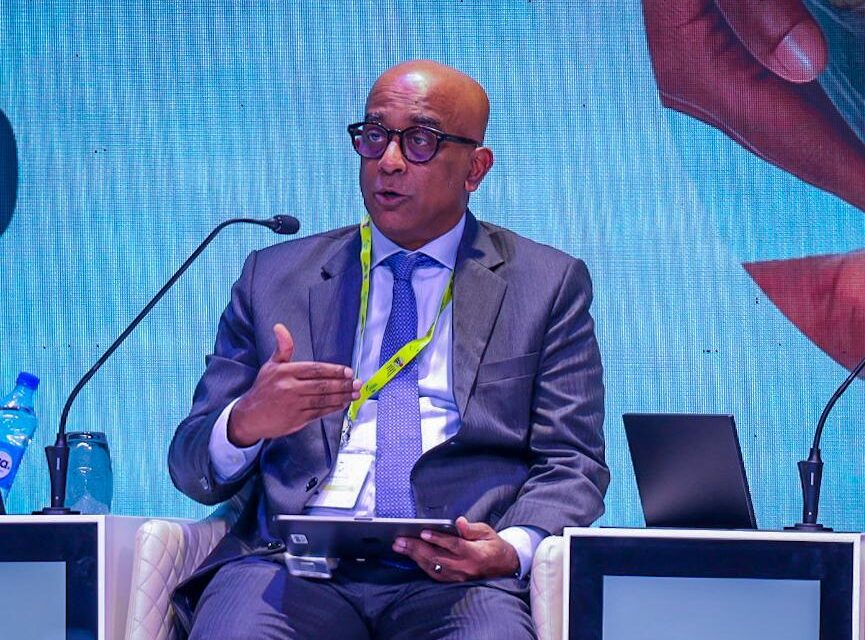
World Bank Country Director for Nigeria, Mathew Verghis, gave the cost in Abuja whereas presenting the most recent Nigeria Development Update (NDU), titled, “Beyond the Federal Purse: How Higher Revenues Reshaped State Priorities.”
Verghis mentioned the reforms had considerably elevated fiscal revenues out there to states, making a “unique opportunity” to increase essential financial and social infrastructure.
He said, “The daring macroeconomic reforms have considerably elevated fiscal revenues on the state stage, offering a novel alternative to enhance infrastructure, training, healthcare, and water providers, that are essential to creating extra and higher jobs.
“Strengthening spending efficiency, accountability, and service delivery will be essential to ensuring that public resources improve the lives of Nigerians.”
According to the replace, gross federation revenues elevated by 69 per cent in actual phrases between 2023 and 2025, whereas state revenues rose by about 93 per cent over the identical interval. State expenditure additionally elevated by about 92 per cent.
But the surge in sources had to date been channelled extra aggressively into financial infrastructure and monetary consolidation than human-capital improvement.
World Bank mentioned the share of capital expenditure in whole state spending rose from 46 per cent to 61 per cent between 2023 and 2025, with transport infrastructure recording the biggest improve.
Presenting the report, World Bank Chief Economist for Nigeria, Dr. FisehaHaile, mentioned spending priorities had shifted in the direction of financial infrastructure in 29 of the 33 states for which information have been out there.
“Transport, particularly road infrastructure, experienced the largest increase in spending across more than 30 states out of the 35 states for which we have data,” Haile mentioned.
While spending on well being, training and social safety additionally elevated in absolute phrases, they expanded extra slowly than financial infrastructure, the report mentioned.
The share of training in whole state expenditure consequently declined from 14.9 per cent in 2021 to 12.1 per cent in 2025, whereas well being spending remained broadly secure at seven per cent.
Social safety carried out higher, with its share rising from 1.4 per cent to 4.4 per cent.
World Bank mentioned the sample underscored the necessity for states to make use of their improved fiscal positions to strengthen human capital and repair supply, notably if Nigeria was to translate financial progress into sustained poverty discount and employment.
21 States Cut Debt Burden
Beyond infrastructure spending, greater revenues additionally strengthened state stability sheets.
The report disclosed that 21 states considerably diminished their debt-to-GDP ratios between 2021 and 2025, supported largely by stronger federation transfers.
However, Haile cautioned that the mixture enchancment hid substantial variations amongst states, with some recording sturdy fiscal surpluses whereas others posted deficits, as expenditure outpaced revenues.
He mentioned the coverage problem was now not merely to extend revenues however to make sure that the extra fiscal house generated measurable improvement outcomes.
States additionally recorded progress in internally generated income, with about 14 states posting will increase of greater than 50 per cent. Enugu, Abia and Osun have been among the many main performers.
The financial institution urged states to deepen home income mobilisation, notably by means of private earnings and property taxation, with the intention to cut back publicity to risky federation transfers.
It additionally seen important enhancements in fiscal transparency, with almost all states now publishing budgets, quarterly price range implementation experiences, audited monetary statements, and debt experiences.
Haile mentioned the following problem was to translate improved fiscal data into higher spending selections.
“Building on these significant gains, the next step is to strengthen fiscal institutions to turn better information and improved fiscal data into better results,” he mentioned.
He recognized persistent weaknesses within the alignment between budgeted and precise capital expenditure, money and dedication controls, public funding administration and fragmented monetary administration techniques.
The financial institution known as for stronger own-source income mobilisation, credible budgeting, improved public funding administration, and nearer alignment between expenditure and improvement priorities.
It urged stronger federal-state fiscal coordination to reward reforming states, enhance useful resource utilisation, and cut back publicity to income volatility.
At the broader financial stage, World Bank mentioned the Nigerian financial system remained resilient within the face of renewed international shocks, with actual GDP increasing by 4.2 per cent within the first half of 2026, in contrast with 3.9 per cent and three.5 per cent within the corresponding durations of 2025 and 2024, respectively.
The financial institution mentioned the growth was pushed largely by providers, alongside stronger contribution from agriculture.
It added that the development in progress had stabilised the poverty price for the primary time since 2019.
The Middle East battle, nevertheless, produced combined results on the financial system.
Higher oil costs boosted export earnings and helped increase the present account surplus to $12 billion, equal to 7.1 per cent of GDP, within the first half of 2026, from $8.6 billion or 6.7 per cent of GDP a yr earlier.
Gross exterior reserves additionally rose above $55 billion in September, supported considerably by international portfolio inflows, whereas reforms continued to enhance the functioning of the international alternate market.
Haile mentioned the premium between the parallel and official international alternate markets had remained marginal at lower than two to 3 per cent for an prolonged interval.
Infrastructure Spending Rises Faster Than Social Sectors
The report examined how greater public revenues have been altering state funds between 2023 and 2025. It said that gross federation revenues elevated by 69 per cent in actual phrases over the interval, pushed largely by exchange-rate reforms, the elimination of the petrol subsidy, and stronger income administration, with states receiving the largest increase by means of greater statutory allocations, refunds, intervention funds and stronger VAT collections.
As mixture state revenues rose by about 93 per cent rose in actual phrases between 2023 and 2025, the World Bank report mentioned expenditures elevated by about 92 per cent.
Capital spending expanded and its share of whole expenditure climbed to 61 per cent, from 46 per cent, led by transport infrastructure in addition to greater spending on housing, agriculture, and different growth-related investments.
Spending on well being, training and social safety additionally will increase, however at a slower tempo than financial infrastructure. Education’s share of whole expenditure falls to 12.1 per in 2025 from 14.9 per cent in 2021, well being spending stays broadly secure at round 7 per cent, and social safety’s share rises to 4.4 per cent. from 1.4 per cent.
Inflation Still Weighs on Households
Despite the improved exterior place, inflation remained a serious constraint on family welfare and enterprise exercise.
World Bank mentioned headline inflation had fallen sharply from 27.6 per cent in January 2025 to fifteen.2 per cent in December 2025, supported by tight financial coverage and diminished exchange-rate volatility.
However, greater gas costs following the Middle East battle, coupled with lean-season meals pressures, had slowed the disinflation course of.
Haile mentioned greater vitality prices have been feeding into meals and transportation costs whereas elevating manufacturing prices for companies and financing pressures for governments.
He said that Nigeria’s inflation remained excessive in contrast with a number of peer economies, citing Ghana’s decline from above 50 per cent in 2023 to about 5 per cent by August 2026.
Fiscal Gains Face Election-year Test
World Bank additionally reported an enchancment in Nigeria’s fiscal place in the course of the first half of 2026.
The federal fiscal deficit narrowed from 5 per cent to 4 per cent of GDP, whereas the mixture fiscal surplus of states elevated from 0.7 per cent to 0.9 per cent of GDP, reflecting stronger federation transfers.
The public debt-to-GDP ratio consequently declined from about 40 per cent in 2025 to an estimated 38 per cent in 2026.
However, Haile warned that spending pressures may intensify within the second half of the yr on account of quicker venture execution, improvement expenditure, and election-related spending.
He recognized the Middle East battle, potential international financial tightening and El Niño-related shocks as key draw back dangers.
World Bank projected common financial progress of 4.4 per cent between 2026 and 2028, whereas inflation was anticipated to say no steadily to about 12 per cent by 2028.
Haile confused, nevertheless, that progress alone wouldn’t be sufficient, stating that jobs, notably better-quality jobs, ought to stay the “North Star” of Nigeria’s reform agenda.
He known as for sustained macroeconomic stability, elevated funding in vitality and human capital, improved regulation, stronger market competitors and better mobilisation of private and non-private capital.
Haile mentioned Nigeria’s expertise over the previous three years had demonstrated that troublesome reforms have been potential.
“The task going ahead is to carry the same level of ambition into the structural reforms,” he mentioned.
Essentially, the report disclosed that the nation’s income reforms had delivered a considerable fiscal windfall to state governments, stating, nevertheless, that the majority of extra sources has been channelled into financial infrastructure and debt discount quite than a commensurate growth of training and different human-capital investments.
The report confused that state income windfall, occasioned by gas subsidy elimination, amongst different reforms, had triggered a serious reallocation of spending in the direction of financial infrastructure, whereas human-capital spending had not stored tempo.
Haile mentioned transport spending, notably street infrastructure, accounted for the sharpest improve, rising from 13 per cent of whole state expenditure to about 27 per cent in 2025.
“Transport, particularly road infrastructure, experienced the largest increase in spending across more than 30 states out of the 35 states for which we have data,” Haile mentioned.
The shift adopted a 69 per cent improve in gross federation revenues in actual phrases between 2023 and 2025, pushed largely by the elimination of the petrol subsidy, international alternate reforms, and stronger income administration.
States benefited from greater statutory transfers, improved VAT collections, refunds, intervention funds, and the settlement of longstanding federal obligations.
However, World Bank warned that the rise in public sources had but to translate totally into stronger human-capital outcomes.
According to the report, though state capital expenditure elevated considerably, the share of training in whole expenditure fell from 14.9 per cent in 2021 to 12.1 per cent in 2025.
Health expenditure remained broadly secure at seven per cent, whereas social safety elevated from 1.4 per cent to 4.4 per cent.
The financial institution mentioned the spending sample offered each an achievement and a coverage problem, notably as Nigeria sought to transform financial restoration into sustained poverty discount and job creation.
Oyedele Says Per Capita Income Has Grown by About 15 Per Cent
In a panel dialogue, Minister of Finance and Coordinating Minister of the Economy, Mr. Taiwo Oyedele, said that reforms had helped stabilise the financial system and put it on a path to quicker progress.
Oyedele mentioned Nigeria’s financial system was rising quicker than its inhabitants, including that with higher navigation, inclusive progress was foreseeable.
He added that with the development, if sustained, poverty discount could be achieved.
He, nevertheless, identified that Nigeria’s bettering financial indicators weren’t an indication of full restoration.
The minister mentioned the federal government recognised the development in key financial indicators however insisted that the true check was whether or not stronger progress would translate into jobs, greater incomes, and improved residing requirements.
The minister mentioned, “The fact that the economy is growing does not mean that we have arrived. We must avoid complacency.”
While insisting that stability was the muse and never the vacation spot, he confused the necessity for Nigerians to permit ongoing reforms to ascertain a stronger financial basis.
He mentioned the federal government was concentrating on progress that may have a direct impression on Nigerians quite than merely pursuing greater headline progress figures.
Oyedele mentioned, “We want growth, but not growth for the sake of it. We want growth that creates jobs.”
The minister additionally pointed to rising authorities income relative to inhabitants progress as a sign of enchancment in Nigeria’s per capita earnings, saying per capita earnings has grown by about 15 per cent in 2026.
Ndubuisi Francis and James Emejo
Follow us on: