

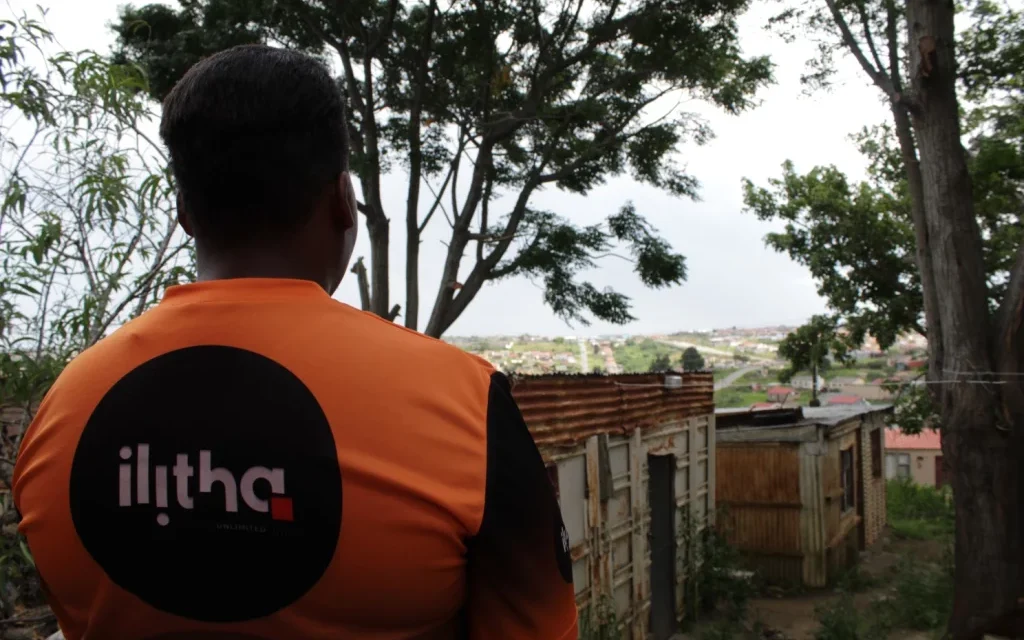
Vuyani Jarana, CEO of Ilitha Telecoms, is taking reasonably priced broadband into underserved townships and rural communities. In a dialog with PHATHISANI MOYO, he explains why connecting houses is barely the start, and the way schooling, healthcare and native companies may flip web entry into lasting financial alternative.
As a boy rising up in Eastern Cape Province, Vuyani Jarana was fascinated by the voices popping out of a radio. He and his mates puzzled how individuals may converse from inside a field, so they might open discarded units and attempt to repair them.
“We wanted to understand how it worked, even though there were no people inside it,” remembers the chief govt officer (CEO) of Ilitha Telecommunications, a township and rural broadband supplier based in 2019.
Television was one other attraction. One family in his village had a tv and a generator, turning its lounge into a casual cinema the place youngsters gathered after soccer to look at motion pictures. The room usually became chaotic as they took over all the area, Jarana instructed TechCabal in an interview on Monday.
Today, the previous Vodacom govt, a cellular community connecting thousands and thousands throughout Africa, is constructing broadband networks for communities just like the one the place he grew up. Ilitha needs to attach 600,000 houses, backed by R500 million ($30.4 million) in funding from Absa Corporate and Investment Banking (CIB). In 2025, the corporate additionally secured a R420 million ($25.5 million) funding from Meridiam, a European sustainable infrastructure investor, to develop high-speed fibre entry to no less than 500,000 low-income houses.
The purpose isn’t merely to supply web entry, however to make broadband helpful sufficient for individuals to spend money on it, enhance their lives and construct companies round it. That means understanding how individuals dwell, not simply laying fibre and putting in routers, in keeping with Jarana.
A profession he didn’t plan
Telecommunications was not Jarana’s first alternative. He had been accepted to check drugs and chemical engineering, however his plans modified when his father died whereas he was writing his closing highschool examinations. As the youngest little one in a family with out a breadwinner, he felt answerable for serving to assist his household.
“I decided not to go straight to university,” he stated. “Instead, I looked for a job that would train me while paying me.”
He started his profession as a trainee technician at Transkei Post and Telecommunications, a former telecoms operator, in an association that mixed formal coaching with sensible work. The organisation paid for his research, permitting him to earn an earnings whereas persevering with his schooling part-time. He later joined Vodacom and moved into strategic and management roles earlier than taking on a place at South African Airways (SAA), the nationwide flag provider airline.
His engineering background taught him to interrupt issues into manageable components. Corporate life taught him that a firm’s evaluation of its efficiency can differ sharply from the client’s expertise.
“When you work on the operations side, it is easy to look at your own standards and assume that you are doing well,” he stated. “But when you manage customer experience, you begin to see the gaps.”
An organization can spend money on infrastructure and design service requirements. However, clients decide it by whether or not the connection works when wanted, whether or not the worth is reasonably priced, and whether or not the service is dependable. That distinction would form Ilitha’s strategy to underserved communities, the place merely providing a cheaper model of a product designed for wealthier households is probably not sufficient.
Building for the way in which individuals dwell
After leaving SAA, Jarana returned to a enterprise alternative he had thought-about earlier than becoming a member of the airline. He introduced colleagues collectively to deal with a hole within the telecommunications business. Demand for broadband was rising, however many township and rural households lacked access to dependable, high-capacity connections.
The Covid-19 pandemic uncovered the issue. As work, schooling and on a regular basis providers moved on-line, some households struggled with connections too gradual or unreliable to assist even a Microsoft Teams name.
Pricing offered one other barrier. Traditional cellular information fashions usually reward clients who signal long-term contracts or purchase giant bundles upfront. Those with much less cash to spend can find yourself paying extra per gigabyte whereas having fewer choices for dependable broadband.

Ilitha was constructed round a completely different proposition: reasonably priced, reliable connectivity designed for a way individuals use their houses and neighbourhoods.
The firm expanded into 27 township and peri-urban communities across the Eastern Cape and KwaZulu-Natal provinces over 18 months. The Absa funding will assist its subsequent progress part, however Jarana says enlargement have to be financially sustainable.
“We have an ambition to connect 600,000 homes within a defined period, but we must do it through financially practical phases that bring more households online within the right commercial structure,” he stated.
Each neighborhood has completely different inhabitants densities, connection prices and infrastructure necessities. He cautioned that increasing too rapidly with out a viable enterprise mannequin may depart the corporate with an costly community it can’t preserve.
“There is growing interest in the township market, and some entrants may approach it as a land grab,” Jarana stated. “As a smaller player, we are comfortable choosing the areas where we believe we can build a strong proposition.”
For Ilitha, success is dependent upon whether or not clients can use the service constantly and whether or not the economics work for each the family and the enterprise.
The neighbourhood is a component of the community
One response is Ilitha’s nomadic broadband mannequin, which retains clients with an lively go related throughout taking part houses somewhat than tying entry to 1 tackle.
“A nomadic service builds on that neighbourhood effect and also allows us to address some of the needs usually associated with mobile broadband,” Jarana defined.
The mannequin displays how individuals transfer between neighbours’ houses and spend time inside their communities. Instead of treating broadband as a service confined to 1 family, Ilitha permits its community to serve clients throughout taking part houses.
The pay as you go mannequin presents a separate problem. A family might not be capable of recharge each week, despite the fact that its router stays half of the put in infrastructure. Ilitha asks clients to maintain their routers switched on so others can profit from the community. This helps the corporate get better infrastructure prices whereas extending the community’s usefulness.
But affordability alone doesn’t assure common use. Customers additionally want causes to maintain paying for the service.
“If someone only uses the internet for WhatsApp and a few other basic activities, many products can meet that need,” Jarana stated. “But when a household uses broadband for streaming films and television, educational content for children, or security cameras, the value of a high-capacity connection becomes much clearer.”
These actions encourage clients to recharge commonly. They additionally reveal why Ilitha needs to construct providers round connectivity somewhat than merely promote web entry.
“We have come to see use cases as part of the social contract between us and our customers,” he stated.
What occurs after the router is put in?
Jarana needs Ilitha to assist providers that create jobs and widen entry to alternatives usually simpler to seek out in wealthier communities.
Education is a precedence. Children in township and rural households have comparable ambitions to their friends elsewhere, however many lack entry to extra studying assist. Online tutoring will be costly at the same time as unemployed academics and graduates search for work.
Ilitha is exploring partnerships to supply curriculum-aligned content material for learners from Grade 1 to Grade 12, alongside platforms that might assist academics function as impartial service suppliers.
“Children in these communities have the same aspirations as children anywhere else,” Jarana stated. “They want to become doctors, engineers, scientists, presidents and company leaders. They should not have to rely on chance to get the coaching and support they need.”
Healthcare is one other potential utility. Ilitha says it’s working with TruMD, a South African virtual healthcare provider, to supply on-demand physician consultations. The broader thought is to make broadband a gateway to helpful providers whereas creating alternatives for native companies and expert employees.
Building the community has itself required shut coordination between native companies and bigger contractors. Jarana stated Ilitha initially thought-about outsourcing extra development work however discovered that connecting houses at scale requires continued involvement within the communities the place it operates.
“You cannot outsource the work and walk away,” he instructed TechCabal.
The subsequent problem is sustaining the community effectively. Ilitha is creating digital-twin capabilities to watch routers, assess community efficiency and establish why gadgets go offline. Such instruments may assist cut back upkeep prices because the enterprise grows.
Jarana insists that social affect should go hand in hand with industrial self-discipline.
“It is not charity,” he stated. “If pricing and delivery are designed properly, people are willing and able to pay for a service that is accessible and useful, while the business can still make a margin.”
Connectivity can’t cease on the city boundary
Jarana believes rural connectivity requires greater infrastructure funding that lets smaller web service suppliers and native entrepreneurs attain communities which can be costly to serve.
Satellite providers may assist the place fibre is unavailable, offered costs are reasonably priced. Ilitha sees them as potential enablers somewhat than essentially direct opponents.
He known as on authorities and improvement finance establishments to assist drive digital transformation by utilizing colleges, clinics, hospitals and police stations as anchor clients for fibre networks. Jarana maintains that their demand may assist justify the preliminary funding, whereas the identical infrastructure serves surrounding households and companies.
“A young person or locally owned business should be able to use that infrastructure to connect 200 or 500 homes and build a viable local business,” Jarana stated.
The lacking items in lots of areas are the underlying infrastructure and financing fashions that make such companies attainable.
Jarana applies the identical pondering to schooling. South Africa’s universities cannot accommodate every high school graduate, and constructing extra campuses won’t be sufficient. Online studying may widen entry, however provided that college students have dependable connectivity and high quality educating somewhat than a digital replica of the emergency preparations used in the course of the pandemic.
“If we do not act now, we will face the same questions in 10 or 15 years about what opportunities are available to the children coming through the system,” he stated. “We need to start building those opportunities today.”
True scale calls for shifting past surface-level integrations to sturdy execution. We’ve filtered the noise out of Moonshot 2026, optimising the convention strictly for high-calibre connections between startup founders, international monetary operators, enterprise leaders and people rewiring Africa’s technical frameworks. Get 20% off Early Bird tickets for a limited time.