

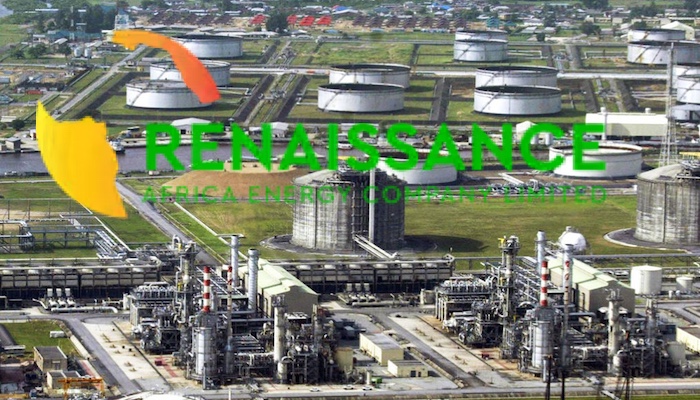
Renaissance Africa Energy Company Limited has partnered 13 banks to supply a subscribed financing portfolio of $4.1 billion and N435 billion to indigenous oil and fuel contractors, as the corporate pursues an formidable manufacturing progress programme of 500,000 barrels per day.
The Renaissance Vendors Financing Scheme (RVFS) unveiled at a Memorandum of Understanding (MoU) signing ceremony in Lagos gives credit score help in each naira and US {dollars} to native contractors executing initiatives for the corporate.
A press release issued on Thursday listed the 13 collaborating banks as First Bank, Guaranty Trust Bank, Zenith Bank, Access Bank, United Bank for Africa, Stanbic IBTC Bank, Standard Chartered Bank, First City Monument Bank, Sterling Bank, Wema Bank, Union Bank, The Infrastructure Bank, and African Export-Import Bank (Afreximbank).
Managing Director and Chief Executive Officer of Renaissance Africa Energy Company, Tony Attah, stated the programme’s lengthy historical past demonstrated the potential to scale contractor financing in help of the corporate’s progress agenda.
Attah stated, “This is a programme that has been running since 2010. We are unveiling the power of Renaissance and the scalability of the company.”
He recalled that the initiative started within the Shell period with a fund of about N1 billion, with a later ambition to develop it to $1 billion.
Attah said, “What we’ve been able to achieve as Renaissance is to go into that partnership with these incredible 13 banks who have come up to support this vendor scheme at over $4 billion and over N435 billion funds available for the vendors to be able to support us in our growth agenda.”
He stated the scheme had recorded no defaults beneath earlier administrations.
He said, “So very good credit to the vendors themselves. Integrity is a core value to us at Renaissance.”
Attah additionally stated rates of interest supplied to contractors have been aggressive.
According to him, “The interest rate that the banks are offering to the contractors is very competitive, and it is certainly better than the vendors going out to the respective banks on their own.”
On manufacturing, Attah stated Renaissance elevated output by 100,000 barrels per day inside 100 days of taking on the belongings in March 2025.
The firm has dedicated to rising oil manufacturing to 500,000 bpd by 2030, with fuel manufacturing of greater than 2.2 billion normal cubic toes per day for vitality provide and a further one billion normal cubic toes per day for industrialisation. This aligns with Nigeria’s aspiration to provide three million barrels of oil per day.
Attah said, “That is an enormous scale, and this vendor financing is without doubt one of the strategic choices we’ve put in place to have the ability to help the companions who’re going to go along with us on this journey.
“Funding is a critical aspect of achieving this growth agenda for us.”
Executive Vice President, Finance, Strategy and Commercial, Renaissance, Olusegun Banwo, and Attah stated the scheme’s success could be measured by its precise influence on contractors and undertaking supply reasonably than financing commitments alone.
The firm stated key indicators would come with the amount of financing disbursed, how rapidly certified distributors might entry funds, and the extent to which the ability improved mobilisation, undertaking execution, Nigerian content material, and manufacturing.
Banwo described the initiative as a transition from alignment to formalisedcommitment, utilizing strategic financing to drive enterprise progress and shared prosperity.
He referred to as the 13 banks’ dedication a major vote of confidence within the programme and the standard of its vendor ecosystem.
He defined, “The ambition is not simply for Renaissance to grow, but for capable Nigerian businesses to grow with us as we pursue our target of one million barrels per day by 2030, while also contributing to the Federal Government’s broader production ambition.”
Chairman of the Petroleum Technology Association of Nigeria (PETAN), Wole Ogunsanya, stated the scheme might assist tackle one of many largest constraints dealing with indigenous oil and fuel service corporations: entry to inexpensive credit score.
He defined that native contractors typically confronted excessive rates of interest, quick compensation durations, and stringent collateral necessities from Nigerian banks, making it tough to accumulate tools wanted for oil and fuel initiatives.
Under the scheme, contractors with confirmed initiatives might entry financing by means of the collaborating banks with out typical collateral, topic to contract verification by Renaissance, Ogunsanya stated.
He said that borrowing charges from Nigerian banks might vary between 10 and 12 per cent, and expressed hope the ability might carry them all the way down to between eight and 9 per cent.
According to Ogunsanya, the ability addresses an tools hole that might constrain manufacturing progress throughout the business.
He stated indigenous service corporations would want substantial funding in tools and {hardware} over the following 4 to 5 years to help larger output.
He said that tools acquired by means of the scheme might additionally serve different operators when not required for Renaissance’s initiatives, extending the advantages past the corporate and strengthening Nigeria’s oilfield providers sector.
Renaissance stated the scheme constructed on a contractor financing programmeintroduced in 2010 through the Shell period.
It added that the refreshed scheme had a goal portfolio of $1 billion and N100 billion, however its subscribed portfolio had reached $4.1 billion and N435 billion.
Peter Uzoho
Follow us on: