

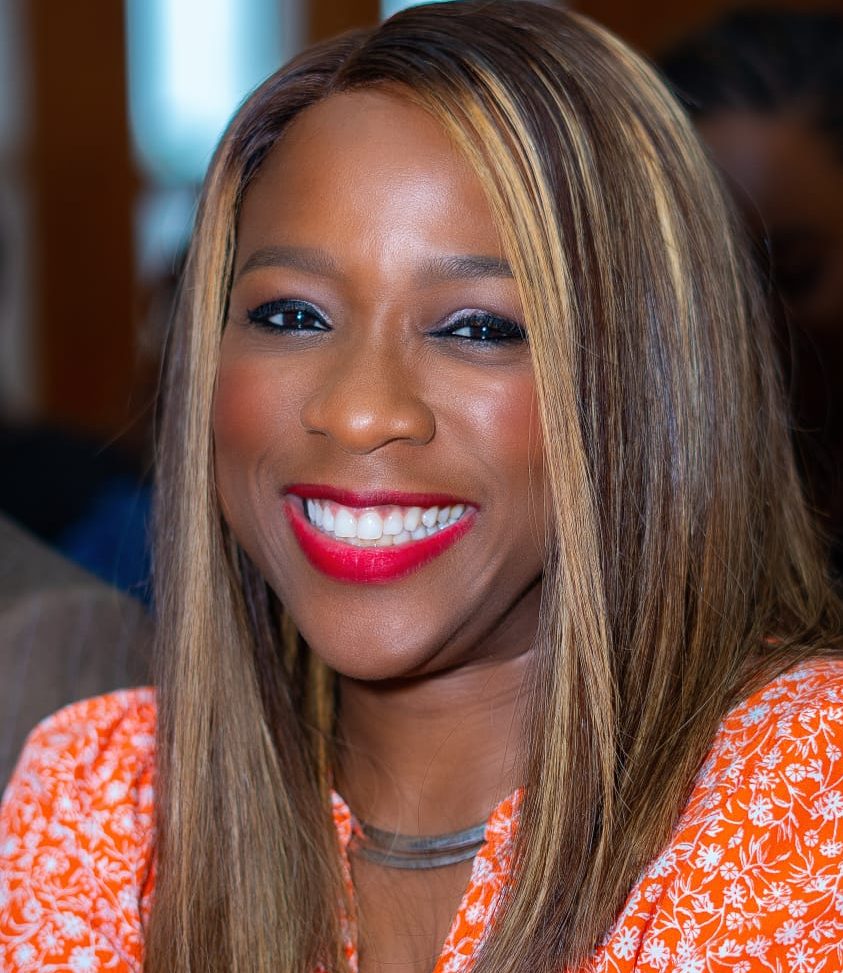
By Bennett Oghifo
“Come On Naija,” a media manufacturing firm, famend for its creativity and culturally wealthy initiatives, has opened its doorways to partnership with manufacturers, establishments, and filmmakers to create bespoke content material and leisure properties that allow them to authentically join with audiences.
The firm which has produced prime quality movies, options, has restated its willpower to showcase the depth of Nigerian narratives, cultural values and creative excellence whereas additionally contributing to the enrichment of the worldwide leisure trade.
The Chief Executive Officer of the corporate, Mrs. Olawumi Fajemirokun, stated “Come on Naija” operates on the intersection of leisure, tradition, media and the artistic economic system, remodeling compelling Nigerian tales and cultural experiences into professionally developed mental property with the potential to attain audiences in Nigeria, throughout Africa and internationally.
According to Mrs. Fajemirokun, “Come On Naija” has a diversified enterprise portfolio as a multimedia manufacturing firm overlaying filmmaking, figuring out tales, creating mental property, assembling artistic and industrial partnerships, producing high-quality content material, in addition to creating a number of alternatives for audiences, manufacturers, traders, distributors and cultural establishments to take part within the worth chain.
The “Come on Naija” boss says the corporate is out to fill a void within the leisure trade, including, “Nigeria possesses one of the world’s richest reservoirs of human stories, traditions, entrepreneurial experiences, historical events, personalities, communities and cultural expressions. Yet many of these stories remain undocumented, underdeveloped or presented to audiences without the scale and production quality they deserve. Come On Naija exists to close that gap.”
The firm’s craft and storytelling excellence has already acquired worldwide validation. “Come on Naija” received three awards on the prestigious Toronto International Nollywood Film Festival (TINFF) in Canada, a recognition that additional affirms its dedication to authenticity, excessive manufacturing requirements and world relevance.
The firm has recorded hit productions together with “Afamefuna: An Nwa Boi Story” – the first-ever characteristic movie on the Igbo Apprenticeship System – and “Iwe Ala: An Ojude Oba Story”, each of which drew robust critiques and applause from artwork lovers for his or her creativity and authenticity.
“Come on Naija” builds its storytelling philosophy on 5 core ideas: authenticity, excellence, leisure, cultural preservation, and world relevance. This philosophy is predicated on the premise that content material needs to be concurrently native in its id and common in its emotional attraction.
Beyond filmmaking, “Come on Naija” can be a cultural preservation agent via cultural analysis, culture-based movies and documentation.
Speaking not too long ago on her film journey, Mrs. Fajemirokun stated: “My journey into storytelling started at a really younger age, rooted within the shared cultural experiences of my childhood. I fondly keep in mind gathering across the tv with my siblings to watch Tales by Moonlight on NTA. Growing up in a family of six youngsters, tv viewership was a collective, intentional expertise somewhat than a person luxurious. We had to align on what we watched, which fostered a deep, shared appreciation for narrative construction and group engagement from early on.
“This early fascination with narrative was further nurtured through literature. While my peers were immersed in foreign classics like Enid Blyton’s Famous Five, I found myself profoundly drawn to indigenous authors, particularly the children’s books written by Mamman Jiya Vatsa. His work deeply resonated with me because it reflected our immediate reality. Discovering at an early age that our own stories could be beautifully documented and celebrated left an indelible mark on me. It shaped my creative vision as an Executive Producer, instilling a lifelong commitment to championing authentic Nigerian and African narratives on the global stage.”
On her defining second within the trade, she stated: “The defining second was truly born out of a profound disappointment and a definite lack of assist from considered one of my present enterprise traces. It pressured a pointy pivot, making me notice I wanted to look towards a artistic space I had quietly considered since my early 20s. That interval taught me the invaluable lesson of accepting failure and refusing to let it grow to be a everlasting setback.
“When you look in the beginning of all the things, the very very first thing God did was creation, and that divine act is intrinsically linked to us as people. We are constructed to create. Because of this, I’ve come to firmly consider that participating in creativity is among the biggest works an individual can do; totally believing in your artistic instincts in the end leads to the true path of achievement.
“This deeply personal realization perfectly aligned with a strategic look at Nigeria’s economic and demographic landscape. Nollywood is a dynamic, highly influential, and rapidly growing sector. When you couple that with the fact that Nigeria has a remarkably young demographic, with an average age of 18, it becomes clear that our youth are actively looking for constructive, creative avenues to express themselves. The film industry is uniquely positioned to absorb and empower this incredible talent. Realizing this, I saw an opportunity to approach storytelling from a fresh, impactful angle. I wanted to create films that bridge the gap between tradition and modernity. Rather than focusing solely on historical epics, my vision is to produce contemporary stories that remain deeply rooted in our shared cultural identity. By bringing these relevant, authentic narratives to global screens, we provide a platform that allows us all to feel immensely proud of our heritage, turning cultural preservation into a viable medium for economic and social impact.”
On her Netflix hit, “Afamefuna: An Nwa Boi Story,” Mrs. Fajemirokun remarked: “Afamefuna is a mission that is still extremely shut to my coronary heart. When I replicate on why world and native audiences related so deeply with it, the reply lies in the best way the movie mirrors the resilient entrepreneurial spirit inherent in Nigerians.
“From a really younger age, most Nigerians are uncovered to the mechanics of enterprise. Whether it’s an off-the-cuff micro-enterprise or a significant brick-and-mortar operation, industrial ingenuity is embedded in our DNA. We should not a tradition that waits for handouts; we don’t consider in passivity, and nothing is solely given to us without spending a dime. Regardless of gender or background, there may be an understood necessity to work onerous to your success. Even youngsters as younger as ten or twelve are sometimes already brainstorming how to promote books or have interaction in small trades to contribute and develop.
“Afamefuna speaks directly to this resilience and our capacity for patience while building from the ground up. Audiences resonated with the authentic depiction of our work ethic, our drive to establish enterprises from a young age without requiring massive capital, and the ultimate triumph of building something out of nothing. The film showcased the kind of grassroots success stories that we see all around us every day, and that universal drive for self-determination is what made it so powerful.”
A recurring theme in Mrs. Fajemirokun’s initiatives is the celebration of tradition, id, and genuine African experiences. For her, it essential that Nigerian tales are advised from an genuine perspective somewhat than via borrowed narratives? Mrs. Fajemirokun expatiates: “I firmly consider that our distinctive tradition is precisely what makes us stand out on the worldwide stage. Unfortunately, due to our colonial historical past, there was a lingering tendency to borrow overseas narratives and dilute our personal tales. This was usually carried out merely to achieve acceptance or to meet a perceived bar of globalization, closely influenced by what’s Westernized or historically accepted by the West as ‘civil’ and ‘modern.’
“For a very long time, there was a false impression that cultural authenticity and world relevance have been mutually unique— as if leaning into your traditions meant you can not actually be a world citizen except you conformed to these borrowed requirements.
“This is a story that has been handed down via generations, and it’s an space I’m deeply obsessed with correcting. By bringing these genuine scripts to life, my purpose is to encourage individuals to really feel immense delight in what our tradition and traditions symbolize. When we totally embrace who we’re, we naturally command consideration.
“Nigerians do not need to blend in or rewrite their identities to fit a foreign definition of modernity; our heritage is our competitive advantage. While some may love it and others may not, the truth is that the global audience will always respect when you stand firmly in your own identity. If you do not stand for something, you will fall for anything, and I choose to stand for the brilliance of our authentic African stories.”
On her largest classes in movie enterprise, Fajemorokun stated: “From an viewers perspective, one of many clearest classes is that viewers naturally crave high-stakes narrative momentum. Audiences respect an exhilarating trajectory, they need to be captivated, they usually love a well-crafted cliffhanger. Even inside a deeply dramatic characteristic, weaving in parts of pressure and strategic pacing is crucial to preserve viewers totally invested.
“On the economics facet, filmmaking is inherently a high-risk enterprise. Because the monetary stakes are so elevated, probably the most crucial forex within the fashionable market is visibility. Success depends on maximizing visibility, advertising, and market penetration at each stage of the mission. Because of this high-risk framework, long-term industrial sustainability depends closely on strategic partnerships.
“We are constantly identifying and aligning with corporations, brands, and institutional organizations that can support our financial structures. Cultivating these strategic alignments is what mitigates risk and ensures that high-quality African cinema remains both culturally impactful and commercially viable.”