

“The conversation of course is going to centre around the role of animation in cultural preservation. It’s also going to be talking about how animation advances the creative industry because we think for many years the impact animation can make the creative economy has been underrated for so many years.”
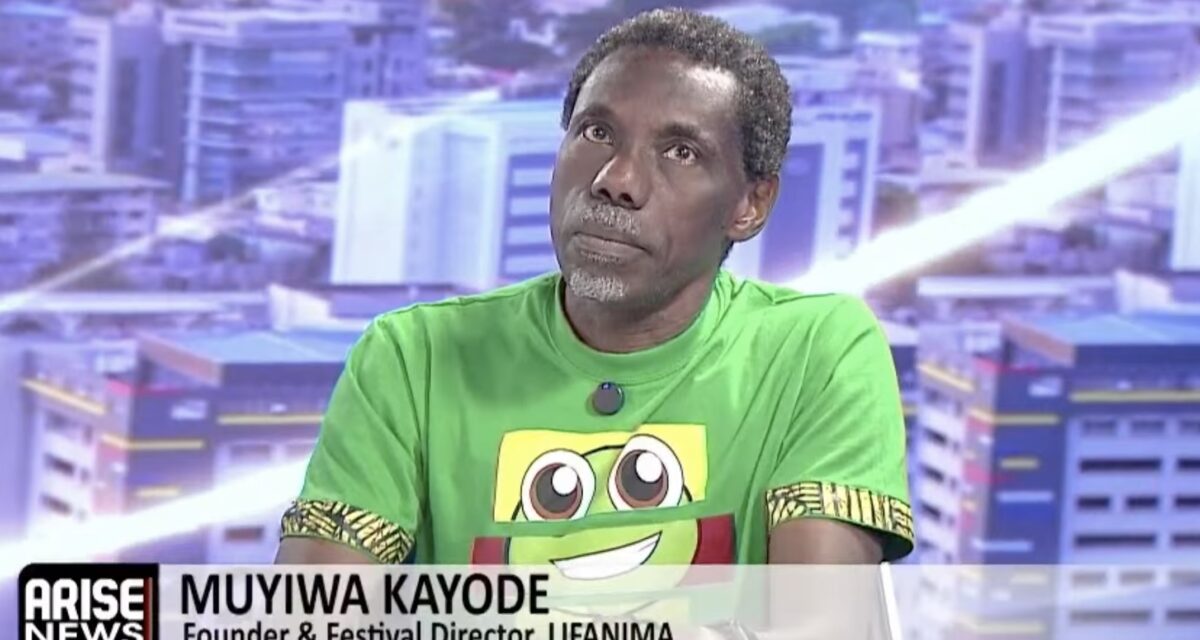
Founder and Festival Director of the LIFANIMA Animation Festival, Muyiwa Kayode has asserted that The affect of animation on Nigeria’s inventive economic system has been underrated for years.
Speaking throughout an interview with ARISE NEWS on Saturday, Kayode stated the competition’s tenth version would concentrate on animation’s function in cultural preservation and its contribution to the inventive trade, bringing collectively native and worldwide stakeholders to look at its potential.
“The conversation of course is going to centre around the role of animation in cultural preservation. It’s also going to be talking about how animation advances the creative industry because we think for many years the impact animation can make the creative economy has been underrated for so many years.”
The three-day competition, scheduled for 20 to 22 October, will function panel discussions, expertise showcases, coaching for secondary college college students and an animation competitors with ₦22.5 million in money prizes. “One of the key objectives of Le Fanima is to address these problems because what our panel sessions do every year is to bring stakeholders together. Those who can solve these problems and those who have the problems.”
Kayode stated entry to funding remained one of many greatest challenges dealing with Nigerian animators. “From my experience, the major challenge is that investors and funders, they don’t see where the money is going to come back from in animation. They don’t see it. Not that it is not there. But they don’t see it.”
He stated he had approached 15 banks whereas creating an animated collection. “When we were developing our own series, Total Tidal, we spoke to 15 banks. 15 banks. And I always put two things before the bankers. I said, I have two business ideas. One, I’m selling doors for the real estate market. And then the other one, I’m producing animated cartoons. Which one would you fund? Everybody wanted to fund the doors because they see physical things they can hold on to if I don’t pay them.”
Kayode argued that animation may generate revenue over an extended interval as a result of the identical manufacturing could possibly be bought repeated. “The next thing I told them is, look, if I produce animation today, I can sell it for the rest of my life. The same production.”
He additionally referred to as for mental property to obtain better recognition as a monetary asset, saying creators ought to be capable of use their work to safe loans. “If I can put down a house to take a loan, why can’t I put down my intellectual property to take a loan? They are both properties.”
Kayode additionally highlighted a federal authorities coverage geared toward growing native animated content material on tv to 70 per cent. “And when we look at the animation content that we watch, especially for the children, we don’t even have 0.1% local content there.”
He stated the scarcity of domestically produced animation had influenced his personal work, together with the creation of Total Tidal. “What motivated us to produce Total Taidu was simply because my kids were growing up on all these foreign cartoons. And I started asking myself as a creative person, how can we answer this challenge? And that’s why we created Total Taidu.”
Kayode stated the competitors allowed totally different animation kinds however excluded AI-generated animation to offer creators skilled in conventional strategies a good alternative. “Somebody can just come in and in 5 minutes, he has done something that looks fantastic. And the guys that are doing the traditional approach, which is what they are trained on, which is what they… they’ll be at a disadvantage.”
He added that questions round synthetic intelligence, authorship and mental property nonetheless wanted to be addressed. “AI has come to stay, yeah, right? But some of these issues cannot be ignored. So you have to use it the right way.”
Kayode stated the standard of the story remained extra vital than the expertise used to supply an animation. “Personally, I say AI is just another tool. It’s not whether it is 2D, 3D, AI, 4D or whatever. It is the power of the story.”
Erizia Rubyjeana
Follow us on: